
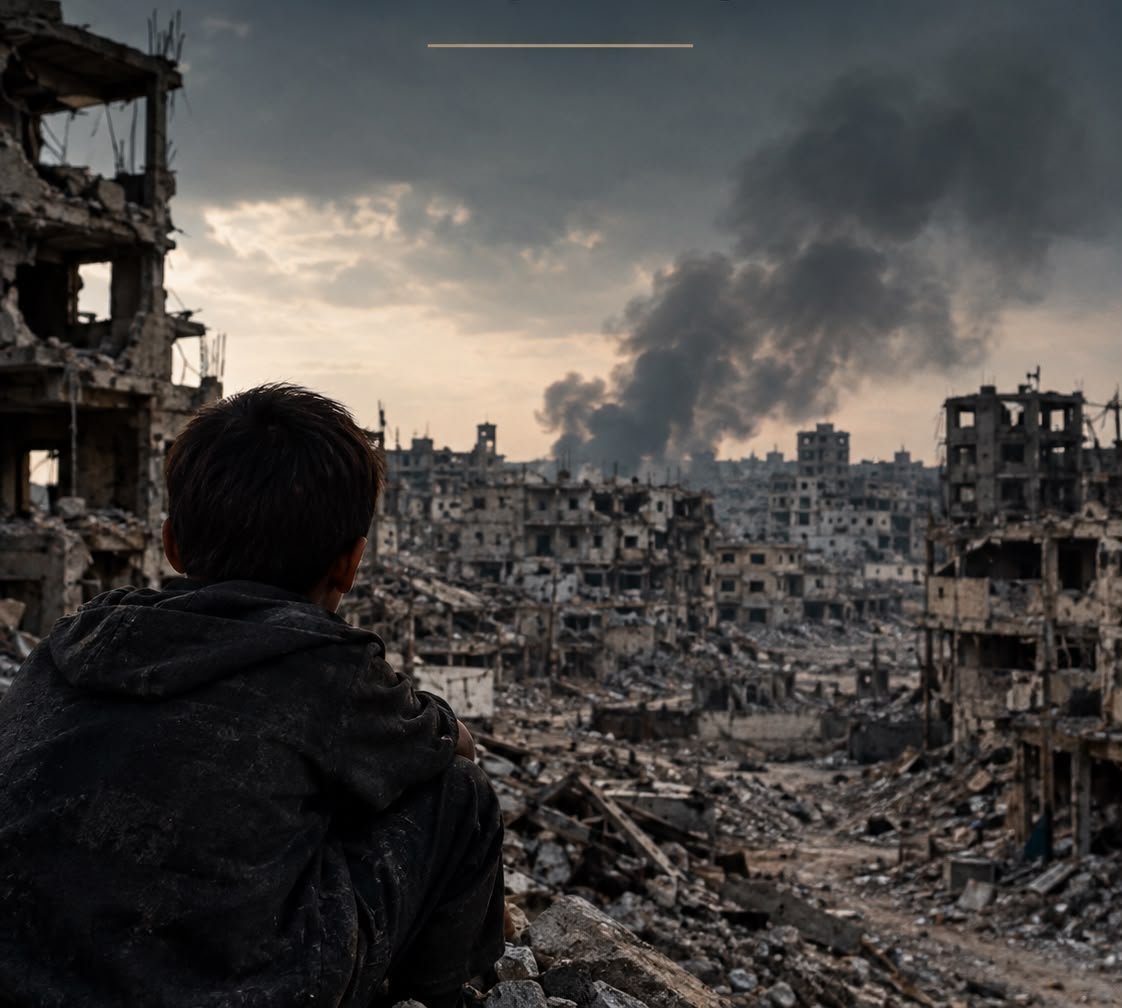
From Alsace-Lorraine to the Occupied and Disputed Territories of the Modern World
Presented by: ZOYA RASHID
Class: ICS (PHY) – PART 2ND
Subject: ENGLISH
Teacher: SIR RIZWAN
INTRODUCTION
The Last Lesson by Alphonse Daudet (1840–1897) is set during the Franco-Prussian War of 1870–1871. France was defeated by Prussia and its German allies, and Alsace and part of Lorraine came under German rule. The story focuses on the effect of this political and military change on ordinary people, especially their language, education, identity, and sense of belonging.
The Franco-Prussian War: 1870–1871
The war was fought mainly between France and Prussia, but other German states joined Prussia during the conflict.
1. Why Did the War Happen?
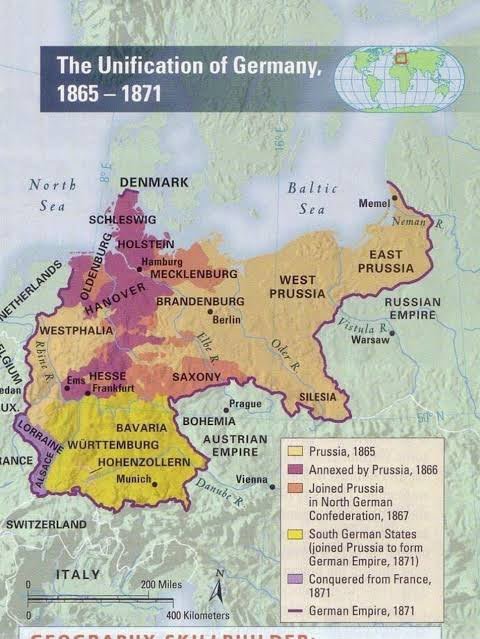
1. Prussia wanted German unification
2. France feared the growing power of Prussia
3. The Spanish throne created a crisis
4. The Ems Dispatch increased the tension
5. The war helped complete German unification
2. How Did Germany Get Alsace and Lorraine?
1 — Prussia expanded its power
2 — Prussia defeated France
3 — France was forced to negotiate
3. What Did the New Rule Mean for the People?
After 1871, Alsace-Lorraine became the German Reichsland Elsass-Lothringen.
The region was administered directly under the German Empire rather than being an ordinary German federal state.
The effects were not simply about changing a line on a map.
Language
German became increasingly important in administration and public life.
The story’s (The Last Lesson) famous school scene represents the loss of the people’s ability to continue receiving their education in French.
Education
In The Last Lesson, the order from Berlin means the children will no longer receive French lessons.
This makes the classroom a symbol of a much larger political change.
Identity
People could suddenly find themselves living under a different state and political system without having personally chosen that change.
Nationality
Political decisions made after a war could force ordinary families to make extremely personal choices
4. Impact of War and Occupation on the People
A. Loss of dignity and pride
People may feel that control over their homeland has been taken away from them.
Their sense of dignity can be affected when an outside authority makes decisions about their land, language, or institutions.
B. Loss or disruption of national identity
A change of political control can create confusion about:
- nationality
- loyalty
- language
- cultural identity
- belonging
Alsace-Lorraine is an excellent example because its population had French, Germanic, and regional cultural influences.
C. Social disruption
War can divide families and communities.
People may:
- leave their homes
- become refugees
- lose property
- be separated from relatives
- face changes in administration and laws
The post-1871 population movement in Alsace-Lorraine demonstrates this directly.
D. Cultural and linguistic pressure
Language can become one of the most important symbols of identity.
That is why the words “France, Alsace” in The Last Lesson have such emotional significance.
E. Education is affected
Schools can become instruments of political and cultural change.
In modern international humanitarian law, an occupying power has responsibilities concerning the functioning of educational establishments and medical services; occupation law is designed to protect civilians rather than simply give the occupying power unlimited control.
F. Medical and basic services can suffer
War can damage hospitals, roads, electricity, water systems and other infrastructure.
Where access becomes restricted or infrastructure is destroyed, medical care and other essential services can become insufficient.
G. Human rights can be restricted
Occupation does not legally erase the rights of the population.
International humanitarian law specifically protects civilians in occupied territory and places duties on occupying powers concerning humane treatment, public order, health, food, medical care, and education.
Hatred, Resentment and Rebellion
- their homeland has been taken,
- their language is being restricted,
- their culture is being threatened,
- their political rights have been reduced,
5. What Happened to Alsace-Lorraine Afterwards?
1871
Alsace and part of Lorraine became part of the German Empire.
1918
Germany lost World War I.
1919
Under the Treaty of Versailles, Alsace-Lorraine returned to France.
1940–1944/45
During World War II, Nazi Germany again exercised control over Alsace and Moselle; the Archives of Alsace describe this as a de facto annexation.
1945 onward
The territories returned to France.
So the region experienced repeated changes of political control.
A French government historical source describes Alsace-Moselle as a region caught between France and Germany from 1870 to 1945, before eventually becoming associated with Franco-German reconciliation.
6. The Current Situation of Alsace and Lorraine
They are French territories today.
Today’s Alsace is in northeastern France.
The modern French region of Grand Est includes:
- Bas-Rhin
- Haut-Rhin
- Moselle
- Meurthe-et-Moselle
- and other departments.
The historically German-annexed part of Lorraine is mainly associated with today’s Moselle, not the whole of Lorraine.
But their identity is more complicated than simply “French.”
7. From Alsace-Lorraine to the Modern World
Are there still occupied territories today?
Yes.
But there is an important distinction:
Not every disputed territory is legally classified as an occupied territory.
Under international humanitarian law, occupation is generally associated with effective, unconsented-to control by a foreign power over territory without sovereign title.
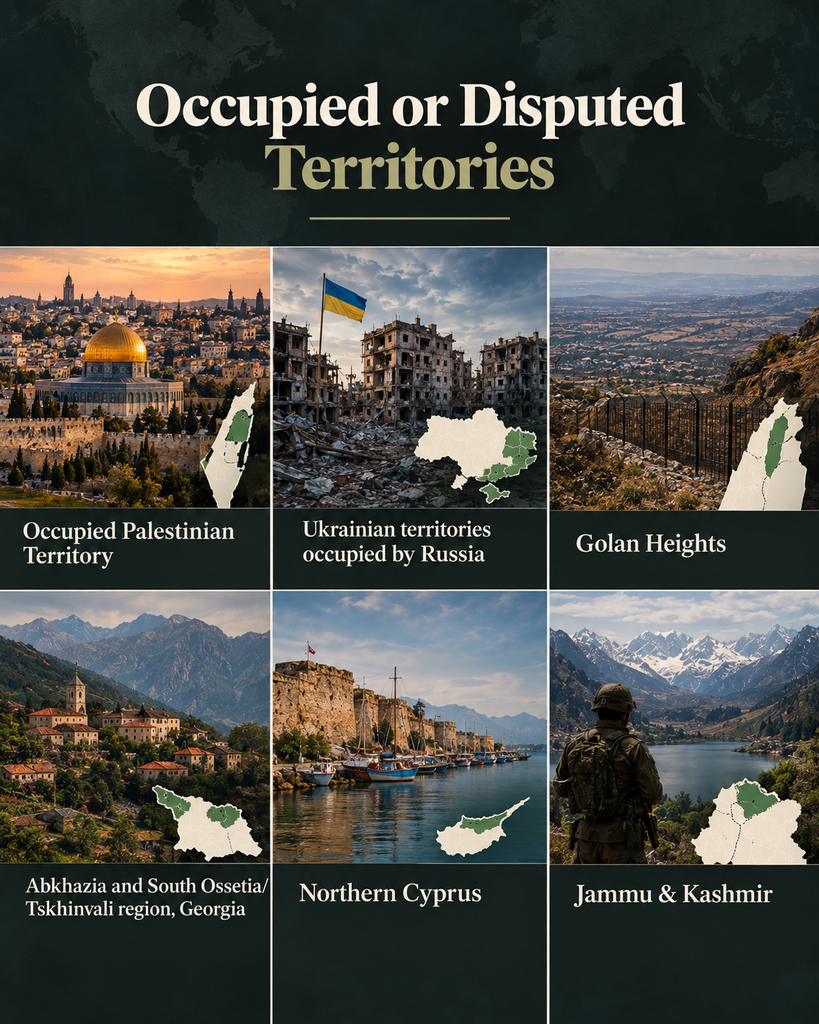
Examples of Present-Day Occupied or Disputed Territories
| Region | Present situation |
| Occupied Palestinian Territory | The UN currently refers to the West Bank, including East Jerusalem, and Gaza as the Occupied Palestinian Territory. The situation includes serious humanitarian, political, and human-rights challenges. |
| Ukrainian territories occupied by Russia | The UN refers to Crimea, Sevastopol, and parts of Donetsk, Luhansk, Zaporizhzhia, and Kherson as temporarily occupied territories of Ukraine. |
| Golan Heights | The UN continues to refer to the Syrian Golan as occupied Syrian territory and states that Israel’s 1981 decision to impose its laws and administration there has no international legal effect under Security Council Resolution 497. |
| Abkhazia and South Ossetia/Tskhinvali region, Georgia | Georgia considers these territories occupied by Russia; European human-rights findings have addressed Russian responsibility and restrictions in the regions. Their political status remains disputed. |
| Northern Cyprus | The island remains divided, with the north administered by Turkish Cypriot authorities and Turkish forces present; the self-declared Turkish Republic of Northern Cyprus is recognized only by Turkey. |
| Jammu & Kashmir | This is best presented as a disputed and divided region, rather than simply calling the entire region an “occupied territory.” The UN has maintained UNMOGIP since 1949 to observe the ceasefire between India and Pakistan along the Line of Control. |
8. The Last Lesson
From One Classroom to the Modern World
Franz did not understand the importance of his French language until he was told that it would no longer be taught.
The people of Alsace did not know, at the beginning, how their political situation would develop.
And Alphonse Daudet himself could not see the entire future of Alsace-Lorraine.
Daudet was born in 1840 and died in 1897. He therefore died before World War I began in 1914, before Alsace-Lorraine returned to France in 1919.
This gives you a very strong final idea.
9. Who Will Be the Next Alsace-Lorraine?
Alphonse Daudet died in 1897 without knowing what would ultimately happen to Alsace-Lorraine. He could not see the First World War, the return of Alsace-Lorraine to France, or the later reconciliation between France and Germany.
In the same way, we cannot know exactly how today’s territorial conflicts will develop. Borders, political relationships and conflicts can change over generations.
What history teaches us is that when borders change through war, the consequences are not limited to governments and armies. Ordinary people experience those changes through their homes, schools, languages, identities, rights and memories.
The future of today’s occupied and disputed territories cannot be known with certainty. History can show us patterns, but it cannot tell us exactly what the next chapter will be.